The life and times of Jenny Holden: Wildlife Consultant, freelance writer, wilderness addict and novice shepherd.
Friday, 24 June 2011
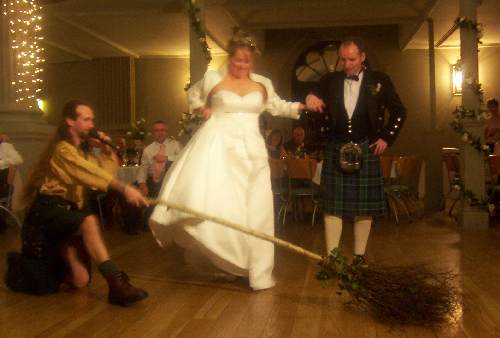
Our Fairytale Handfasting Ceremony
We had a beautiful day for our wedding with wonderful friends. Thank you everyone for making it so special. Enjoy the photos, they are full of happiness :-)
Friday, 17 June 2011
Shearing Time
I had an aim...
The aim was to get all of the sheep sheared before the wedding...
But May was horrendous. Cold and wet and no one around here dared shear early. However, this week it has warmed up again and I decided to jump in and get those lovely fleeces off.
I make no secret about it, I am no great professional shearer. I hand shear my own animals every year and every year I get a little bit better (after initially seeming a little bit worse having had no experience since the previous season).
I like to roo the sheep where possible. Shetlands are an ancient breed and many of them will still naturally shed their fleeces: this is called rooing and their fleeces can often just be plucked off. People bred out this tendency to shed wool to stop this valuable fiber being lost in the fields and hedgerows. However, it takes ages and often seems rather uncomfortable for the animal if the fleece is still too well attached to just lift off. Even though I'm slow, hand shearing is still quicker.
Because the Shetland fleeces are valuable and are privately sold to hand spinners and felters, I try to be careful about the way I shear them. The fleece grows a certain amount each year, the length of this growth is called the "staple".
Machine clipping is far more practical when there are many sheep to be sheared but it does scalp the sheep rather and goes under the rise so removing some of the next year's growth and leaving the tips of the wool fibres blunt ended. When wool that has been cut beneath the rise is carded, little lengths break off at that natural weak point and there can be rather a lot of wastage. The blunt ended fibres can end up looking slightly felted and may not form the natural points that are characteristic of Shetland fleeces and help them to shed water.
Shearing is a bit of an art. You get better at it as you become more confident that you know the shape of the sheep and are not going to snip anything but wool!
My shears are quite big and extremely sharp. Blunt shears are more likely to cause nicks because they do not cut the fleece cleanly and can slip. By keeping the blade parallel to the sheep's body you get a neat even job and are unlikely to injure the animal. The weight of the fleece falling away from the body opens up the next line of fleece to cut.
When shearing you must never pull the fleece up yourself even though at times it is tempting, because it causes wrinkles in the skin which then almost inevitably get nicked or sliced. Pulling the skin taught flat across the body (as you would when waxing your legs!) can be useful when doing the belly though.
For the most part I really enjoy shearing, but it is really physical work. Because Chris's headaches mean that he can't do a lot of bending down (it brings on an attack and causes him to go blind in one eye... not very helpful for shearing!) I'm pretty much on my own, although he is useful at handing stuff over and helping to catch the next animal.
It is now just a few days before my wedding and it is raining. No shearing today. The first guests will be arriving tomorrow and there is no way I'll get any more done now.
However, I've pretty much done it. All 14 girls done, five of the boys and Tolly. Just three boys left and they won't take any harm for another week. Tomorrow afternoon I will get the girls and lambs treated with blow fly preventative and moved to their new nature reserve pasture.
The aim was to get all of the sheep sheared before the wedding...
But May was horrendous. Cold and wet and no one around here dared shear early. However, this week it has warmed up again and I decided to jump in and get those lovely fleeces off.
I make no secret about it, I am no great professional shearer. I hand shear my own animals every year and every year I get a little bit better (after initially seeming a little bit worse having had no experience since the previous season).
Because the Shetland fleeces are valuable and are privately sold to hand spinners and felters, I try to be careful about the way I shear them. The fleece grows a certain amount each year, the length of this growth is called the "staple".
At the end of each growing season, there is usually a natural weak point in the fleece where it would break off. This weak point is called the "rise".
Here on Rosie's fleece, the rise can be seen clearly as a line where the fibres are thinner. I try to shear along this line in order to preserve the full natural staple length of the fleece.Machine clipping is far more practical when there are many sheep to be sheared but it does scalp the sheep rather and goes under the rise so removing some of the next year's growth and leaving the tips of the wool fibres blunt ended. When wool that has been cut beneath the rise is carded, little lengths break off at that natural weak point and there can be rather a lot of wastage. The blunt ended fibres can end up looking slightly felted and may not form the natural points that are characteristic of Shetland fleeces and help them to shed water.
Shearing is a bit of an art. You get better at it as you become more confident that you know the shape of the sheep and are not going to snip anything but wool!
My shears are quite big and extremely sharp. Blunt shears are more likely to cause nicks because they do not cut the fleece cleanly and can slip. By keeping the blade parallel to the sheep's body you get a neat even job and are unlikely to injure the animal. The weight of the fleece falling away from the body opens up the next line of fleece to cut.
When shearing you must never pull the fleece up yourself even though at times it is tempting, because it causes wrinkles in the skin which then almost inevitably get nicked or sliced. Pulling the skin taught flat across the body (as you would when waxing your legs!) can be useful when doing the belly though.
For the most part I really enjoy shearing, but it is really physical work. Because Chris's headaches mean that he can't do a lot of bending down (it brings on an attack and causes him to go blind in one eye... not very helpful for shearing!) I'm pretty much on my own, although he is useful at handing stuff over and helping to catch the next animal.
Some of the girls were lovely to shear, but when I came to do my 8 shearling tups it was a different matter. They have been turned out on a nature reserve for months and virtually untouched. They are BIG, well muscled from climbing over walls and escaping, curly horned and very woolly. Although a few rooed, most were a nightmare to shear because it is their lamb fleece (very long and thick) and having had no trauma (such as raising a lamb) most had no natural break in their fleeces.
I was very sore and bruised after doing five of them!It is now just a few days before my wedding and it is raining. No shearing today. The first guests will be arriving tomorrow and there is no way I'll get any more done now.
However, I've pretty much done it. All 14 girls done, five of the boys and Tolly. Just three boys left and they won't take any harm for another week. Tomorrow afternoon I will get the girls and lambs treated with blow fly preventative and moved to their new nature reserve pasture.
They look a little bald, but I'm sure Rosie and pals are happy with their new styles really!
Thursday, 9 June 2011
Handfasting Cord
I was in a real quandary over what to do about the cord for our handfasting. I looked on-line and found some lovely ones to buy, but they were quite expensive and somehow it didn't seem personal enough. So I sat down this evening with my felting, spinning and beading kit and just played about until an idea emerged.
Fleece from Tolly and Robina (both very pale grey) to represent our flock and love of animals; green for our way of life, finances, fertility, luck, success energy, charity, growth, rejuvenation, prosperity, nurturing, beauty, health, ambition, and to counteract greed and jealousy; red for Chris's beloved Liverpool FC but also will, passion, strength, fertility, courage, health and vigour. The little charms are glass leaves and little paper rosebuds. Leaves for life and vitality, pink rosebuds for perfect happiness, and white for worthiness.
I'm really happy with it :o)
Fleece from Tolly and Robina (both very pale grey) to represent our flock and love of animals; green for our way of life, finances, fertility, luck, success energy, charity, growth, rejuvenation, prosperity, nurturing, beauty, health, ambition, and to counteract greed and jealousy; red for Chris's beloved Liverpool FC but also will, passion, strength, fertility, courage, health and vigour. The little charms are glass leaves and little paper rosebuds. Leaves for life and vitality, pink rosebuds for perfect happiness, and white for worthiness.
I'm really happy with it :o)
Sunday, 5 June 2011
Wooden Wedding Rings
So what tokens do conservationists exchange at their handfasting ceremony? We thought that wooden rings would be gorgeous and managed to find these. They are handmade in Scotland by The Wood Hut, from windfall trees.
Mine will be made from Yew, Maple and Walnut.
while Chris's will be fashioned from Oak and Yew.
All of the trees that provided these woods have ancient symbolism associated with them.
The mystical Yew is a tree of transformation and new beginnings.
Maple tree meanings include balance, promise and practicality.
Oak is a tree representing strength and stability.
Walnut is a tree of passion, broad-horizons and spontanaety.
Let's hope that they bring these characteristics to our marriage!
Mine will be made from Yew, Maple and Walnut.
while Chris's will be fashioned from Oak and Yew.
All of the trees that provided these woods have ancient symbolism associated with them.
The mystical Yew is a tree of transformation and new beginnings.
Maple tree meanings include balance, promise and practicality.
Oak is a tree representing strength and stability.
Walnut is a tree of passion, broad-horizons and spontanaety.
Let's hope that they bring these characteristics to our marriage!
Sunday, 29 May 2011
The Besom Broom
As part of our handfasting ceremony, Chris and I will be leaping over a broomstick!
Many people will recognise this custom as being part of old wedding ceremonies performed by Gypsies and early American slaves, when couples “Jumped the Broom” to cross the threshold of their new homes ensuring fertility, domestic harmony and longevity.
Jumping the broom continues today in modern hand-fasting rituals, when as part of the ceremony, the bridal couple will jump across a decorated besom as conformation of their commitment to each other.
The couple jump the besom together, hand in hand to show that they are two parts of a whole, working together towards a bright new future and all it holds. This jumping of the besom becomes a leap of faith so to speak that they take together. Faith in each other to face what life has ahead for them both good and bad. The besom broom is taken home by the couple and hung over the bed or over the front door - bringing fertility and blessings to the relationship and their home.
For Chris and I, jumping the broom will be the last stage in our ceremony before the popping of corks and general merriment commences.
Many people will recognise this custom as being part of old wedding ceremonies performed by Gypsies and early American slaves, when couples “Jumped the Broom” to cross the threshold of their new homes ensuring fertility, domestic harmony and longevity.
Jumping the broom continues today in modern hand-fasting rituals, when as part of the ceremony, the bridal couple will jump across a decorated besom as conformation of their commitment to each other.
The couple jump the besom together, hand in hand to show that they are two parts of a whole, working together towards a bright new future and all it holds. This jumping of the besom becomes a leap of faith so to speak that they take together. Faith in each other to face what life has ahead for them both good and bad. The besom broom is taken home by the couple and hung over the bed or over the front door - bringing fertility and blessings to the relationship and their home.
For Chris and I, jumping the broom will be the last stage in our ceremony before the popping of corks and general merriment commences.
Monday, 16 May 2011
Jim Fowler
Saturday was a very sad day. On Saturday I learned that I, and many others, had lost a very dear friend: Dr J. A. Fowler.
I received a phone call at midday from my friend Pete asking whether I had heard from Jim and telling me that the police had found his car, an empty kayak and fishing gear. They had also found a body which they were trying to identify.
I called his mobile in desperation but knew the truth. Pete showed the police where to find a photo and soon the unthinkable became reality.
How could this have happened so suddenly? My last contact with him had been a message gleefully telling me that he was taking his kayak out in search of perch.
The cause of the accident is not fully understood. I like to think that it was an epic adventure involving an enormous pike. That would be a great new tale for Jim to tell!
Jim was a well known Ornithologist who has left his mark on hundreds of budding ecologists. His text books, Statistics for Field Ecologists and Statistics for Ornithologists are well thumbed volumes on my bookshelves. Having used these books to help me through my degree it was funny that I should meet and become friends with the man himself the year that I graduated.
I had taken up bird-ringing at university, and, on graduating in 2002, contacted the BTO to find a trainer back at home in Cumbria. They put me in touch with Jim. A few days later I found myself in a woodland in the very small hours being instructed in the art of putting up a mist net. Bird ringing trainers are extremely pedantic about the way in which their nets are erected, where each person stands, which knots are used... and Jim was no different... even though I had been putting up nets almost every weekend for two years! My first impressions of Jim were of a very earnest and slightly bonkers academic; he tried to do everything too quickly, frequently dropping items, losing them and tripping over branches. However, when handling the birds he was a master showing me how to confidently manipulate these tiny animals in order to take them safely from the mist nets. He was an excellent trainer, strict but fair and honest.
Soon I had a job with the World Owl Trust at Muncaster, and Jim was delighted to be able to train me in ringing Barn, Little, Tawny Owls and Kestrels. He also took great delight in stepping to one side while I crawled into gaps between hay bales or up rickety ladders in order to retrieve owlets.
Since my stint working in Scotland, I have done very little birding. But Jim has stayed a close friend and, with his love of blogging and communication, we were in almost daily contact one way or another. His friendly jibes have been an almost constant presence and I can't believe that every time I mention my lambs on Facebook there will be no quip about mint sauce from Jim. In the words of his close friends, Jim was a truly Runcible Character!
One of our last times out together was when I was in the depths of the worst time of my life some months ago now. The comforting familiarity of Jim's company and conversation (and scolding as a wriggling wren managed to escape me before its ring was fixed on) was a great help and a break from everything that was going on outside the woods.
He was a most excellent and intelligent man; friend and mentor. I miss his daily mickey-taking and am deeply saddened that he will not be at my wedding next month: he was so enthusiastic about the opportunity to attend a pagan ceremony. Readers of his blog will know how he celebrated the pagan festivals. He wished to have some druid robes made up by "a little woman in Barrow market that does things for desperate gentlemen."
I received a phone call at midday from my friend Pete asking whether I had heard from Jim and telling me that the police had found his car, an empty kayak and fishing gear. They had also found a body which they were trying to identify.
I called his mobile in desperation but knew the truth. Pete showed the police where to find a photo and soon the unthinkable became reality.
How could this have happened so suddenly? My last contact with him had been a message gleefully telling me that he was taking his kayak out in search of perch.
The cause of the accident is not fully understood. I like to think that it was an epic adventure involving an enormous pike. That would be a great new tale for Jim to tell!
Jim was a well known Ornithologist who has left his mark on hundreds of budding ecologists. His text books, Statistics for Field Ecologists and Statistics for Ornithologists are well thumbed volumes on my bookshelves. Having used these books to help me through my degree it was funny that I should meet and become friends with the man himself the year that I graduated.
I had taken up bird-ringing at university, and, on graduating in 2002, contacted the BTO to find a trainer back at home in Cumbria. They put me in touch with Jim. A few days later I found myself in a woodland in the very small hours being instructed in the art of putting up a mist net. Bird ringing trainers are extremely pedantic about the way in which their nets are erected, where each person stands, which knots are used... and Jim was no different... even though I had been putting up nets almost every weekend for two years! My first impressions of Jim were of a very earnest and slightly bonkers academic; he tried to do everything too quickly, frequently dropping items, losing them and tripping over branches. However, when handling the birds he was a master showing me how to confidently manipulate these tiny animals in order to take them safely from the mist nets. He was an excellent trainer, strict but fair and honest.
Soon I had a job with the World Owl Trust at Muncaster, and Jim was delighted to be able to train me in ringing Barn, Little, Tawny Owls and Kestrels. He also took great delight in stepping to one side while I crawled into gaps between hay bales or up rickety ladders in order to retrieve owlets.
Since my stint working in Scotland, I have done very little birding. But Jim has stayed a close friend and, with his love of blogging and communication, we were in almost daily contact one way or another. His friendly jibes have been an almost constant presence and I can't believe that every time I mention my lambs on Facebook there will be no quip about mint sauce from Jim. In the words of his close friends, Jim was a truly Runcible Character!
One of our last times out together was when I was in the depths of the worst time of my life some months ago now. The comforting familiarity of Jim's company and conversation (and scolding as a wriggling wren managed to escape me before its ring was fixed on) was a great help and a break from everything that was going on outside the woods.
He was a most excellent and intelligent man; friend and mentor. I miss his daily mickey-taking and am deeply saddened that he will not be at my wedding next month: he was so enthusiastic about the opportunity to attend a pagan ceremony. Readers of his blog will know how he celebrated the pagan festivals. He wished to have some druid robes made up by "a little woman in Barrow market that does things for desperate gentlemen."
Farewell on your new travels Jim. Another "well earned break."
Monday, 9 May 2011
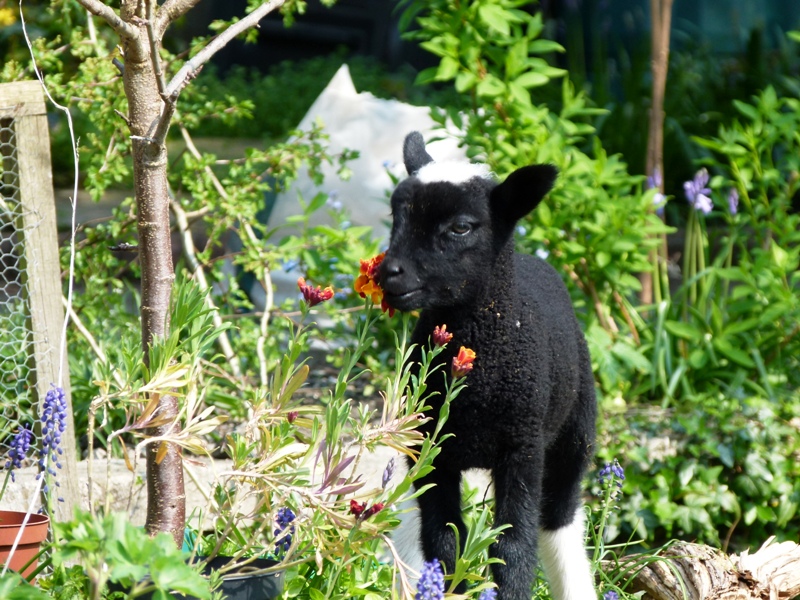
Bram Lamb in the garden
Goodness me! Look at all that exciting stuff to explore!
That smells interesting...
I'll bet those taste good...
and this looks as though it might be a good rolling toy...
But what on earth is that?
It's big...
it's pink...
and if I head-butt it, it moves!
Not a good idea to chase it into that big puddle though!
It's enough to make a lamb very tired!
Time for a snooze I think.
Subscribe to:
Posts (Atom)